Semester project - electrode optimization
Field-based electrode optimization to enhance resonator Q-factor.
Project Overview
- When
- 09/2025 – 01/2026
- Duration
- 4 months
- Context
- EPFL Master
- Laboratory
- Laboratory of Hybrid Photonics (HYLAB), EPFL
- Stack & Skills
-
Python CST Optimization Numerical analysis Electromagnetics
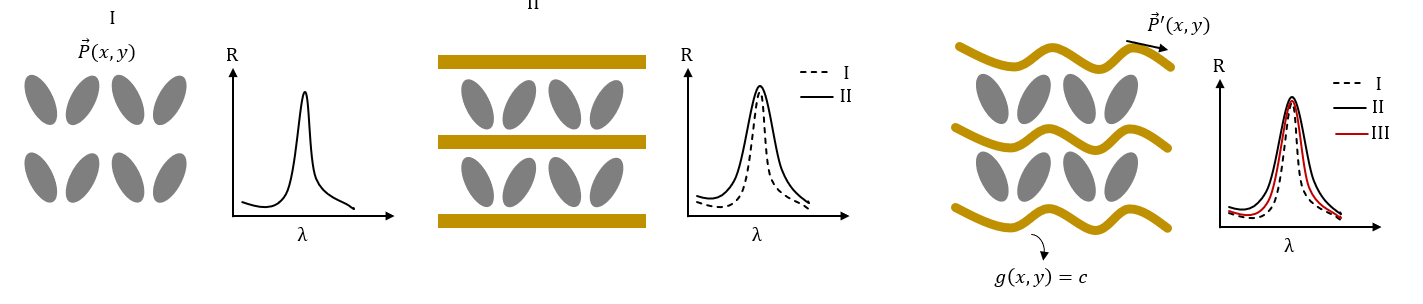
This semester project explores a field-based approach to electrode optimization in photonic and electromagnetic resonators. Starting from CST simulations of a baseline structure, I extracted the field distributions at resonance and identified surfaces tangent to the local power flow. Aligning the electrodes with these surfaces minimizes field disturbance and energy loss, which translates into a measurable improvement in the resonator's quality factor. The work builds on the idea of power-flow-conformal metamaterials and combines electromagnetic theory with numerical inverse design.